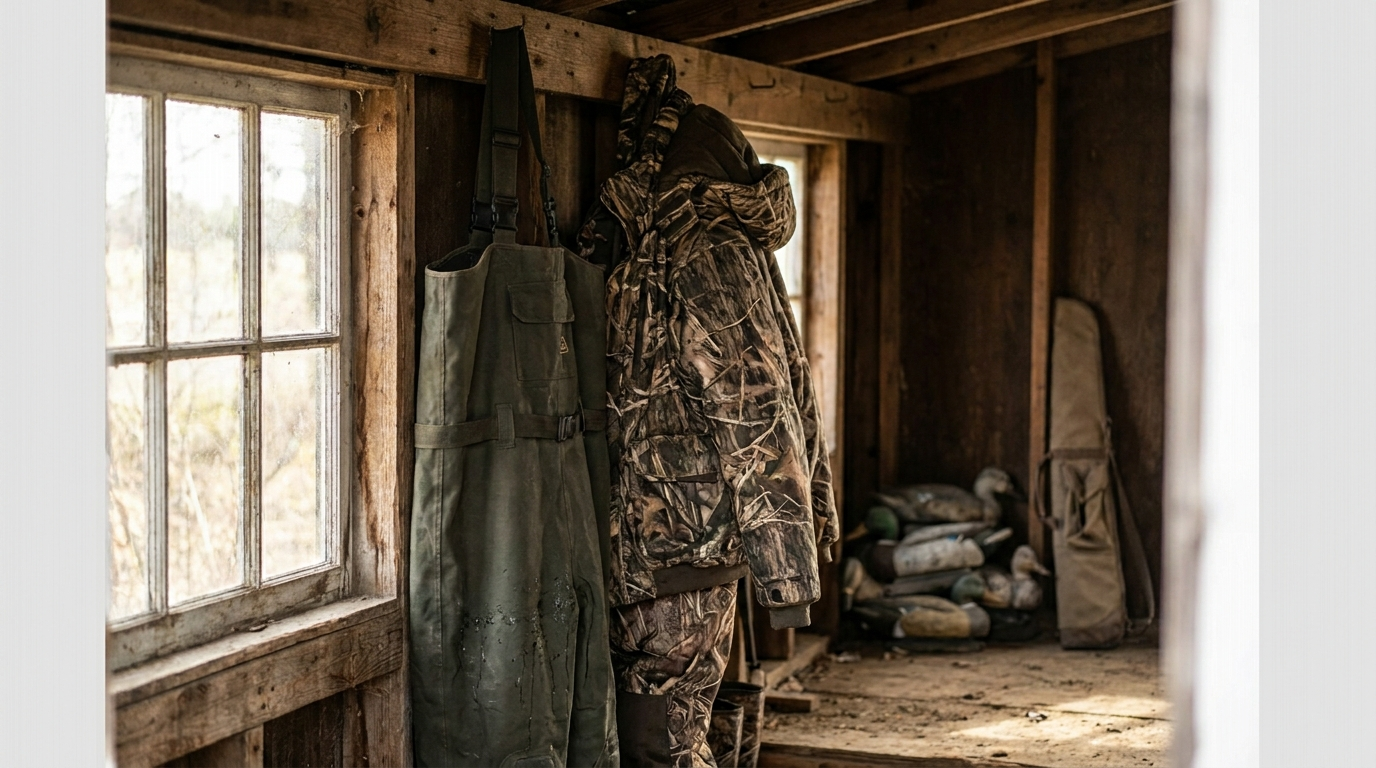
A pair of breathable chest waders that will hold up for five or six seasons runs $250 to $600 at full retail. Buy the identical pair three months earlier or later and the number can be half that. The gear itself never changes.
What changes is the calendar. Almost nobody in a duck blind has actually mapped it out.
Waterfowl retail runs on a release cycle, and that cycle is more predictable than most hunters assume. Wader lines, insulated jackets, and decoy accessories get refreshed on a roughly annual schedule tied to trade shows and fall product launches. That means last year's model — built on the same platform, often with the same membrane or fill — has to move off shelves before the new one lands. Retailers discount to clear it. That discount window is where the real money sits, and it opens well before most hunters start thinking about season.
The three windows that actually matter
Mid-to-late summer, before fall launches. This is the window most hunters miss entirely, because nobody's thinking about duck season in July. It's also the best one. Brands need last year's waders and insulation off the books before the new lineup ships in August and September, so discounts on the outgoing model show up now — often 40 to 50 percent off — while the new stuff is still full price. If a wader or jacket line didn't change materially between last year and this year (check the brand's product page — most changes are cosmetic camo pattern updates, not membrane or fill upgrades), buying the outgoing version now is close to free money.
Right before the opener. Retailers know hunters buy in a panic the week before season, and some run modest promotions to capture that traffic. Selection is good, discounts are shallow — 10 to 20 percent, not 40. Buy here for anything you need to test-fit before opening morning: a new wader boot size, a jacket cut you haven't worn, a call you need to break in. Fit and function matter more than price at this point.
Post-Christmas through late winter. This is the deepest discount window of the year, and also the one with the worst selection. Big-box retailers blow out remaining waterfowl inventory after the holidays, and specialty retailers run true end-of-season clearance once most regions' seasons close. You'll find real deals here, but popular sizes in waders and boots go first. If you wear a common size and aren't picky about camo pattern, this window can beat even the summer clearance. If you need a specific fit, don't count on it.
What to buy off-season, what to wait on
Some gear is safe to buy whenever the discount is deepest, no matter how far off season is. Waders, insulated jackets, base layers, and decoy accessories fall in this category — sizing is stable, and the gear doesn't need field-testing before you commit. Higdon's decoy-side accessories, the wool and canvas pieces Filson runs (their outerwear holds a fit and a construction standard that doesn't shift year to year), and the standard wader platforms from brands like Drake Waterfowl are all things you can buy in July for a November hunt with zero downside.
Calls are the opposite case. A call is a tool you have to learn, and the "best" call is the one that matches your air and your hand — which you can't know from a product page. Buy calls early enough to practice for months, not so early that you're locked into a call you haven't tried blowing yet. If a retailer's return window is generous, buying early and returning what doesn't work is a reasonable play. If it isn't, wait until you can test one in person or get a real recommendation from someone who runs your exact setup.
Decoys sit in the middle. Core spread pieces — the ones you'll use identically for a decade — are safe to buy on any deep discount. Specialty pieces (motion decoys, species-specific full-bodies for a spread you're still building) are worth waiting on until you know your setup's actual gaps, because buying decoys you don't need is the single easiest way to blow a gear budget on something that sits in a garage.
Why used waders are a worse bet than they look
Used waders show up cheap on marketplaces every summer, and the math looks appealing until you account for what you can't see. Breathable membranes fail from the inside — pinholes from a stray decoy anchor, a puncture from brush, a seam that's been compromised by repeated folding and storage. None of that shows up in a photo, and a seller who's moved on to a new pair often doesn't know their old ones leak until the new owner finds out standing in freezing water. Insulated jackets and base layers are a safer used buy because failure there is visible — worn cuffs, flattened fill, a broken zipper. You can inspect those in five minutes. You cannot inspect a wader seam without putting it in a bathtub, and most sellers won't let you.
If you're going to buy waders used, budget for a repair kit and test them in a tub before the first cold morning of the season, not after. If that sounds like more work than it's worth, it usually is.
A discounted new pair from the same brand's outgoing model line is close in price. It also comes with a warranty.
Prioritizing a limited budget
If money's tight and you can only fix one thing before this season, fix waders first. A failed wader is the difference between a good morning and a genuinely miserable one, and it's the piece of gear that fails silently — you don't find out until you're standing in a foot of water at first light. After that: insulation, since layering under a leaky shell doesn't matter and layering under a dry one does. Calls and decoys come last on a tight budget, not because they don't matter, but because a beat-up call still works and a worn decoy still floats. A wader that's failing doesn't have a "still works" version.
Check the current wader and insulation deals before you assume you have to wait for a bigger sale — outgoing-model markdowns on gear from brands like Drake Waterfowl and Filson are often already sitting at the deepest discount you'll see all year, months before the post-holiday clearance most hunters wait for. The clothing deals and decoy accessories worth watching change daily, so it's worth a regular check rather than a one-time scroll in December.
If you're maintaining what you already own instead of replacing it, our wader care guide covers the cleaning and storage habits that actually extend a membrane's life. And if a blind setup is next on your list rather than a wardrobe fix, the layout blind buying guide walks through the same buy-now-versus-wait logic for concealment gear.
None of this requires waiting for a single mega-sale that may or may not show up. The deals are already there, spread across three predictable windows a year — you just have to know which one you're standing in. Check today's active deals and shop the window you're actually in, not the one you assumed was coming.