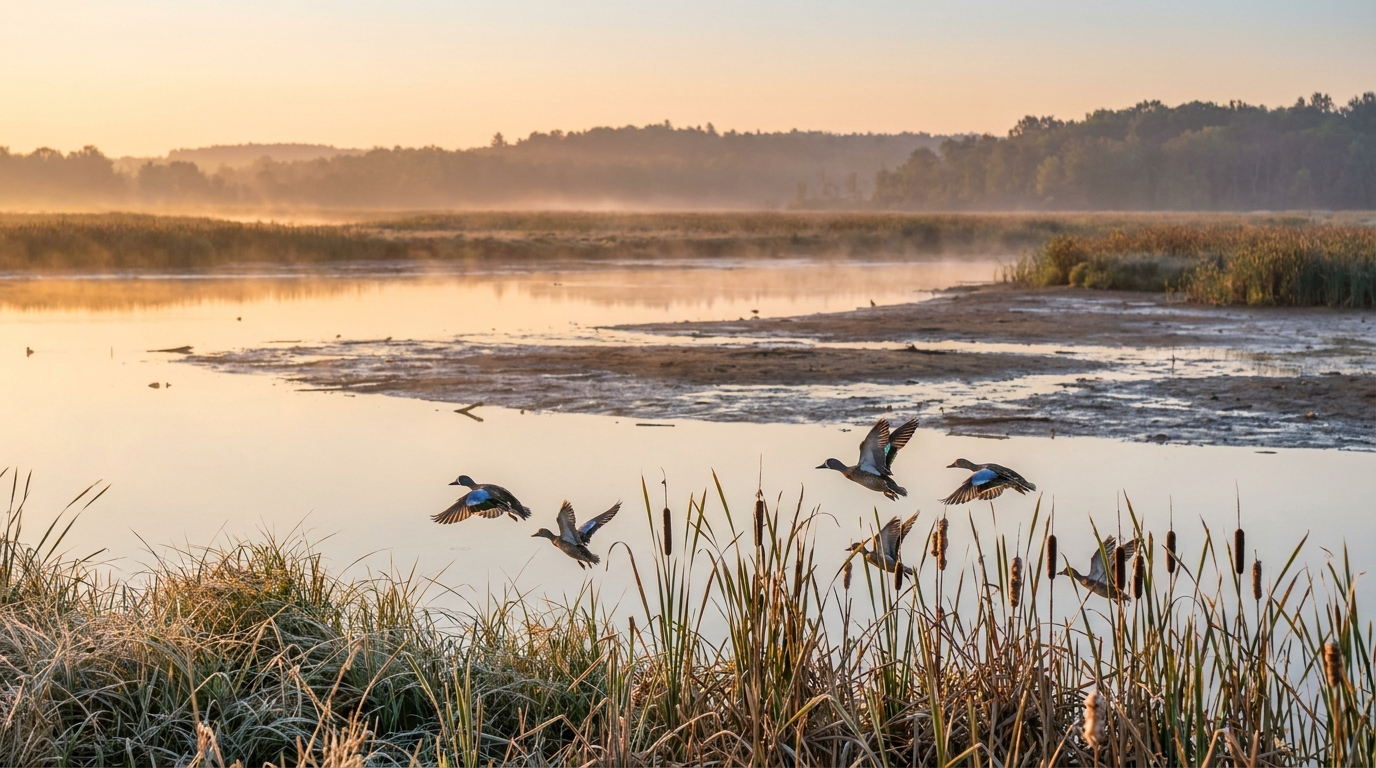
Ask any waterfowl hunter what surprised them most about their first teal opener, and "I kept shooting behind them" comes up a lot. Blue-winged teal cross a decoy spread at 40-plus miles an hour, and if your timing is calibrated for mallards, you'll put a lot of wads behind birds that are already gone.
Hunting blue-winged teal in September is its own thing. The water is different, the gear is different, and the mistakes that cost you birds are completely different from a November mallard hunt. Go in expecting a standard early-season opener and you'll have a frustrating morning. Go in knowing what you're dealing with and it's one of the better shooting opportunities in all of waterfowl.
The September Window and Why It's Short
Most states run a 16-day early teal season starting in the first week of September. Dates vary by state — some open September 1, others a few days later — so verify your specific regulations before you plan around a date. More important: in most states, this is a teal-only season. Wood ducks are often on the same water at the same time, and in low September light, telling them apart from a blue-wing is harder than it sounds. Shooting a wood duck during a teal-only season is an expensive mistake.
Blue-winged teal are among the earliest migrants in North American waterfowl. They start moving south from Canadian and northern U.S. breeding grounds in late August, and they move fast. By the time regular duck season opens in late October, most blue-wings are already in Mexico or Central America. The September opener is your only window in most of the country.
That window is also weather-sensitive. A cold front that drops temperatures 15 degrees overnight can move a whole flight of birds through your area in 24 hours. In the Mississippi and Central flyways, the main push of blue-wings typically peaks between September 5 and 20, depending on how far north you're hunting. Watch the weather, stay flexible, and be ready to adjust if birds have moved south before you can get out.
Where to Find Teal
Teal want shallow water — ankle to shin deep is the target depth. They're feeding on aquatic invertebrates, smartweed seeds, and soft-stemmed vegetation in water they can reach by tipping up. A pond with eight inches of water over a muddy bottom beats a deep slough every time.
The best early-season teal habitat is moist soil management units on federal refuges and wildlife management areas, flooded agricultural fields (especially millet and rice), beaver ponds with exposed mudflat edges, and stock tanks that have drawn down through the dry summer. Sheet water in low spots of harvested fields is worth checking after any late-August rain.
The most reliable way to find teal water before the opener is driving roads in the last week of August with binoculars. You're looking for shallow standing water with open mudflats, no canopy, and some soft vegetation along the edges. Optics pay for themselves on scouting days — a decent pair of binoculars from the truck window covers a lot of country fast and can tell you whether birds are actually using a pond before you bother making the hike in.
Satellite mapping tools like OnX Hunt or Google Maps satellite are also worth running before you go. Low-lying agricultural areas near rivers, flooded timber edges, and managed marshes in the Central and Mississippi flyways are where you want to be spending your August scouting time. Water that holds birds in the evening scouting drive often holds birds at shooting light the next morning.
On public land, pressure moves birds off a given spot fast. Teal pushed off one pond rarely go far — check the next pond over. Getting to public water before shooting time is worth more than any other single tactic on pressured birds.
Keep the Spread Small
Six to twelve decoys is plenty for teal. A tight cluster of a dozen floaters in open water will pull birds just as reliably as a 60-decoy spread, and you'll be done setting up in ten minutes. Teal are social and curious; they don't need the spectacle that diver hunters require.
Use teal or small puddle duck decoys rigged with keel weights or clip-on anchor lines. You're working in six to ten inches of water, and light decoy rigging and anchor gear keeps your setup from tangling on the bottom or dragging in a morning breeze. Set the spread in open water with a clear landing lane into the wind.
Motion is more valuable in early teal season than in almost any other duck hunt. A spinning wing decoy is legal during early teal season in most states — verify yours before you pack one — and in September, when birds haven't been pressured yet, a single spinner will pull teal out of the sky from several hundred yards out. Combine it with a water agitator on a couple of floaters and the spread looks alive from a long way off. Teal that have spotted a spinning wing from 300 yards are often committed before they're even in calling range.
Calling: Less Than You Think
Blue-wing calling and mallard calling have almost nothing in common. The teal call is a rapid, high-pitched chatter — shorter and higher than any mallard sound. Teal calls from Haydel's or Primos are inexpensive and worth carrying. They're useful for pulling birds from a distance or getting a circling flock to commit.
Most teal that have already spotted your decoys and your spinner are done thinking about it. Overcalling at committed birds will flare them. Call to get attention when birds are far away, then shut up once they've turned toward the spread.
Shot Size, Choke, and Swing Speed
Blue-wings weigh about three-quarters of a pound and fly at 40 miles per hour. Decoying birds inside 30 yards call for pattern density, not heavy pellets.
For steel, No. 3 or No. 4 in a 3-inch load is the standard for teal inside 35 yards. No. 2 steel makes sense for birds that flare and cross hard at longer range. For bismuth or tungsten-based loads, No. 5 or No. 6 bismuth gives you a dense pattern at close range without overkill on small birds.
Choke: improved cylinder. Most shots will be 20 to 30 yards, and a modified or full choke throws too tight a pattern at that distance. You want a 25-to-30-inch pattern at 25 yards. Improved cylinder gives you that spread.
The actual problem most hunters have on teal is that they stop the gun at the bird. Teal crossing at speed require a full swing-through — keep the gun moving after you pull the trigger. Every clean miss that feels like it should have connected is a gun that stopped at the moment of the shot. Stay ahead of them. The lead distance that feels correct is usually about half what you actually need.
September Heat Changes Everything
Early teal season means hunting in summer. In Missouri, Arkansas, or Louisiana in early September, you're looking at 80 to 90 degrees by 8:00 a.m. with high humidity. This changes a few things.
For dogs: September is the most dangerous part of the season for retrievers. Labs don't cool off in warm September water the way they would in November, and repeated retrieves in 85-degree heat can push a dog toward heat exhaustion faster than most hunters expect. Bring water for your dog, plan rest periods between retrieves, and be willing to call the hunt if your dog is struggling. A dog that overheats in September can be out for months.
For birds: teal spoil fast in September heat. Get birds on ice within an hour of the last retrieve. Blue-wings are excellent table birds when handled right and nearly inedible when they've sat in summer heat for two hours. Dress birds in the field if you're going to be out long.
For yourself: lightweight, breathable hunting clothing is what September requires. Mosquito protection is non-negotiable in duck country. A headnet costs nothing and lives in a vest pocket; a September morning in a marsh without one is miserable. A pair of hip boots or lightweight knee boots handles most teal water without the heat and weight of full chest waders.
What You Actually Need
Early teal season is one of the lighter packs in waterfowl. What actually matters:
- Six to twelve teal or small puddle duck decoys
- One spinning wing decoy
- No. 3 or No. 4 steel in 3-inch loads, improved cylinder choke
- Hip boots or knee boots
- Ice chest for birds
- Mosquito repellent and a headnet
- Water for you and your dog
You don't need an elaborate blind. Natural vegetation — cattails, tall grass, shoreline brush — is usually enough cover for the small setups that work best for teal.
A September teal opener is a morning hunt. The shooting happens in the first two hours after legal shooting time, once birds start moving and feeding in early light. Plan to be set up before sunrise, hunt through mid-morning, and break down while the sun is still low. You'll be back to the truck before 9:00 a.m. most mornings, ice in the cooler, wondering why you don't do this every year.
See what's on sale in waterfowl gear before the season opens →